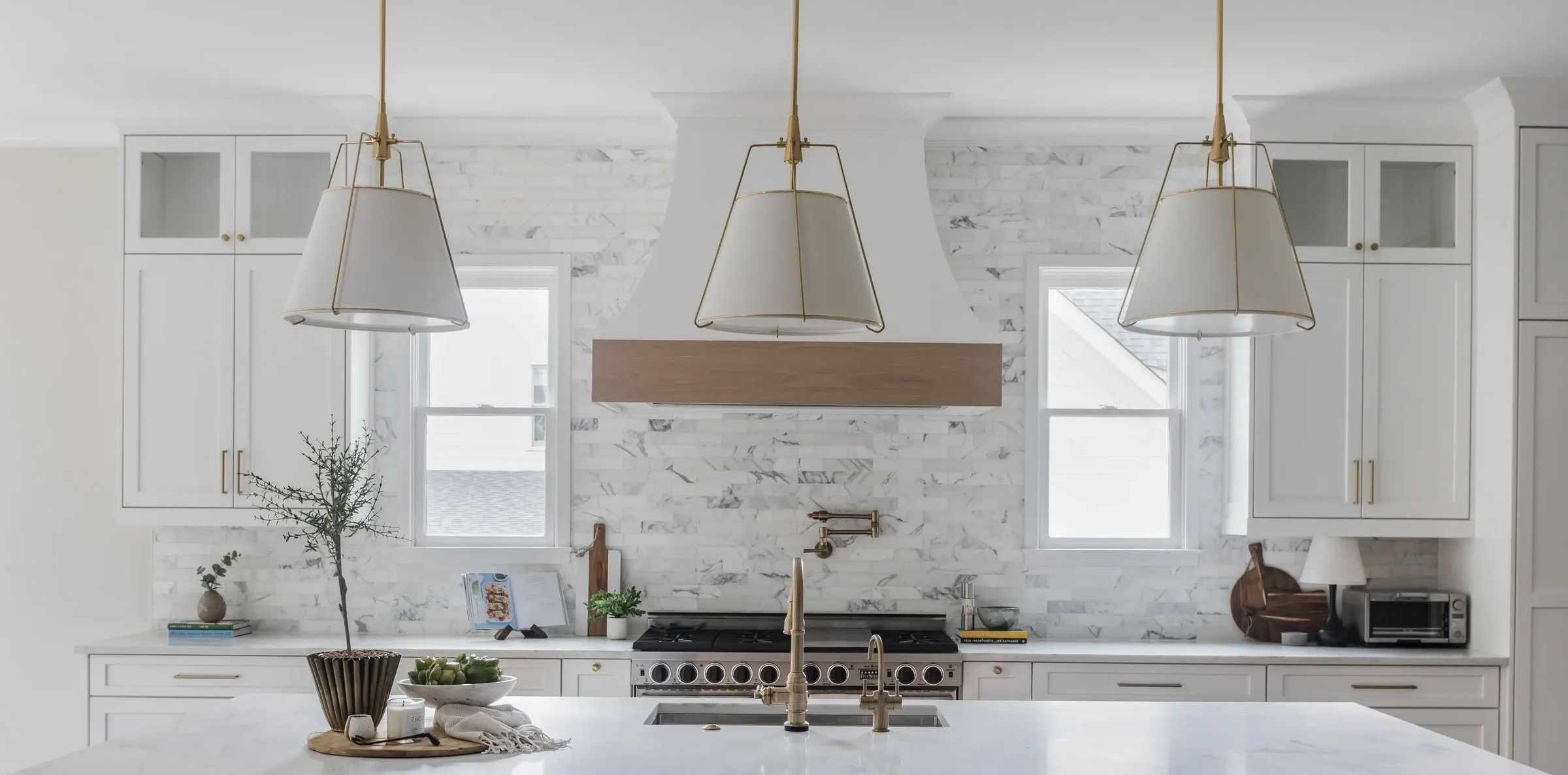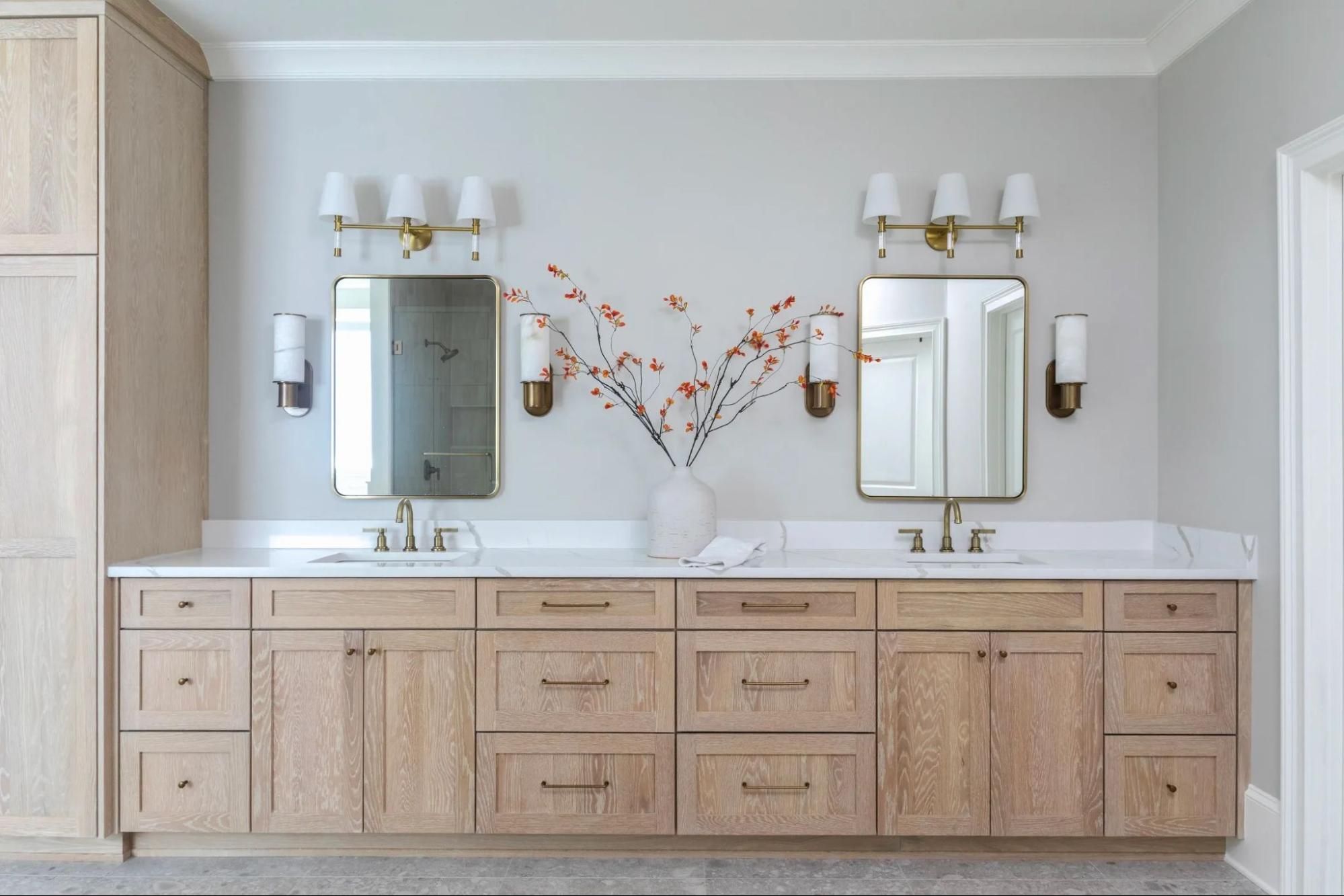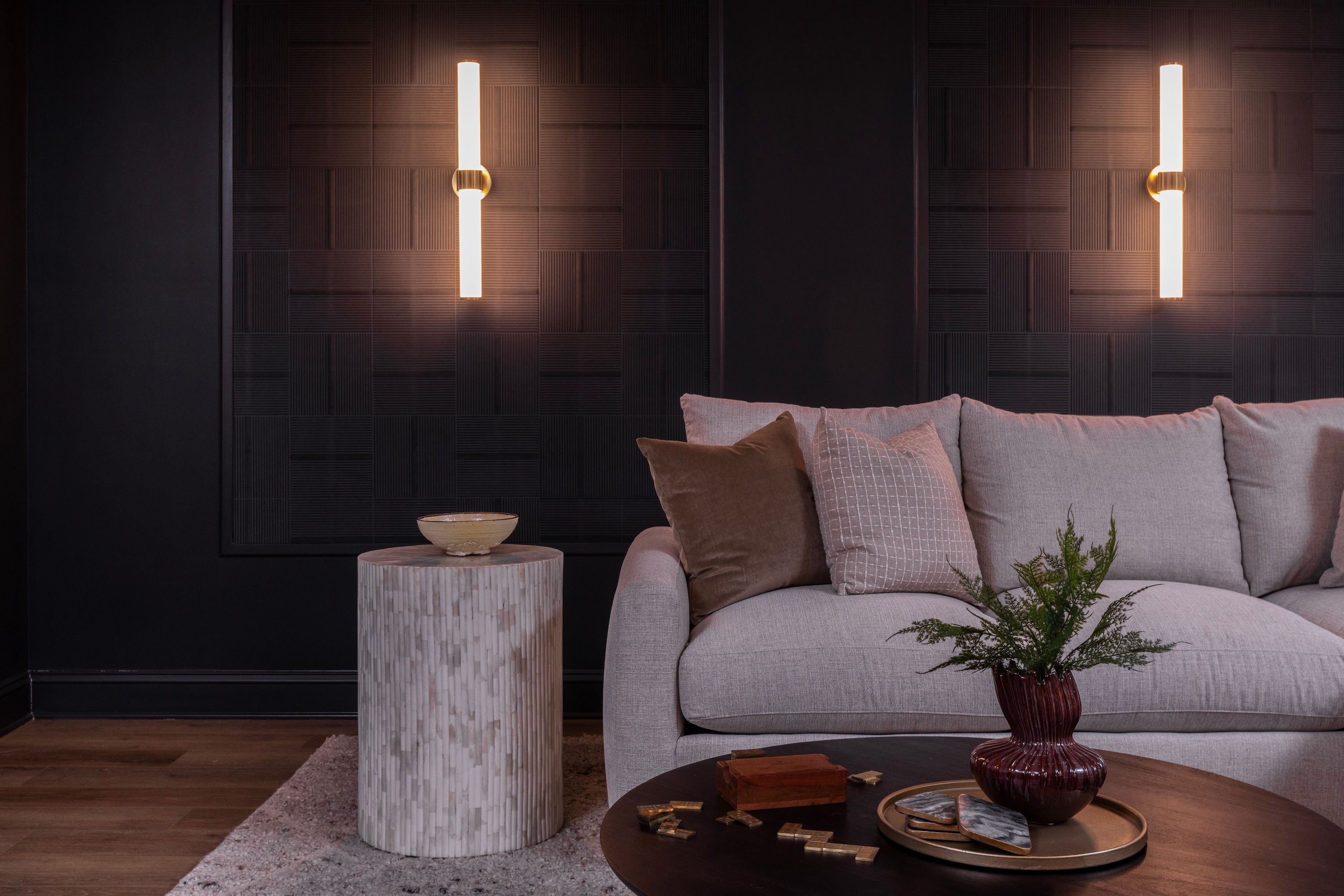

When a room feels like it's missing something, an accent wall often seems like the obvious solution. Maybe it's a bold paint color, a patterned wallpaper, or a decorative millwork detail that could bring some personality to the space.
But are accent walls out of style? Not exactly. However, a single accent wall is rarely the answer to what a room actually needs.
As Atlanta interior designers, we've seen accent walls evolve through decades of changing design trends. And if there's one thing we've learned, it's that lasting visual interest doesn't come from one wall alone. It comes from designing the entire space with intention.
The Accent Wall Has Changed With Every Trend
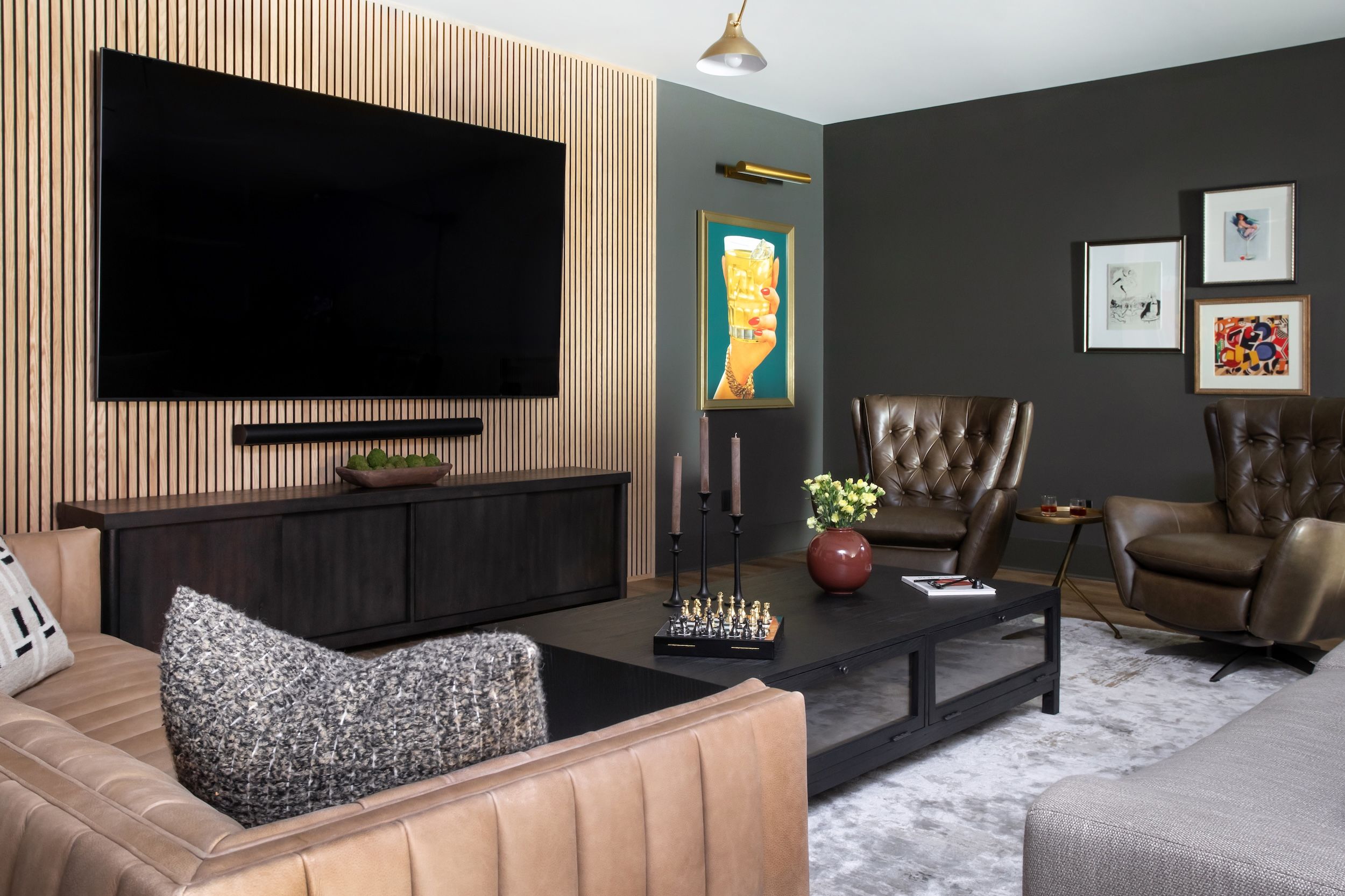
Wood paneling creates a striking accent wall, adding warmth, texture, and architectural interest to this living room.
When clients ask about accent wall ideas, they're usually imagining one of three things: a contrasting paint color, wallpaper, or decorative molding and millwork.
In the 1990s and early 2000s, the painted accent wall was everywhere. Hunter green, burgundy, and deep blue showed up on fireplace walls and behind beds. The idea was to bring in color without committing to an entire room.
Over time, wallpaper also became a popular way to make a statement, with bold patterns and textures used to draw attention to a single wall. The goal was often the same: to create a focal point without transforming the entire space.
Today, the pendulum has swung in the opposite direction. Color drenching wraps an entire room in one hue, sometimes including the trim and ceiling. It's a departure from the single accent wall and another example of how design trends continue to evolve.
There's nothing inherently wrong with embracing a trend. A color-drenched library or powder room can be stunning, but we encourage clients to consider whether they'll still love that look years from now. After all, what's popular today may eventually become just as recognizable as the trends that came before it.
What the Modern Farmhouse Era Taught Us About Architecture
Modern farmhouse style rose to prominence in the early 2010s, bringing a distinctive look defined by shiplap, board-and-batten, white walls, black accents, and gray floors. As the trend evolved, geometric wood accent walls became another popular feature.
We incorporated some of these elements into our own designs. Looking back, though, it's clear how quickly certain details can become associated with a particular era, making an otherwise beautiful space feel dated.
But the bigger issue wasn't necessarily the design elements themselves. It was how widely they were applied, often without regard for the home's architecture. Farmhouse details appeared in spaces where they didn't naturally belong, and entire neighborhoods embraced white exteriors and black windows, regardless of each home's architectural style.
For us, it's a reminder that the architecture of a home should guide its design, rather than the latest trend. Elements like millwork, paneling, and other architectural details have been used for centuries, and it's how and where they're incorporated that determines whether they feel timeless or tied to a particular era. To us, that's the heart of good custom home design.
When You Want an Accent Wall, Something Else May Be Missing
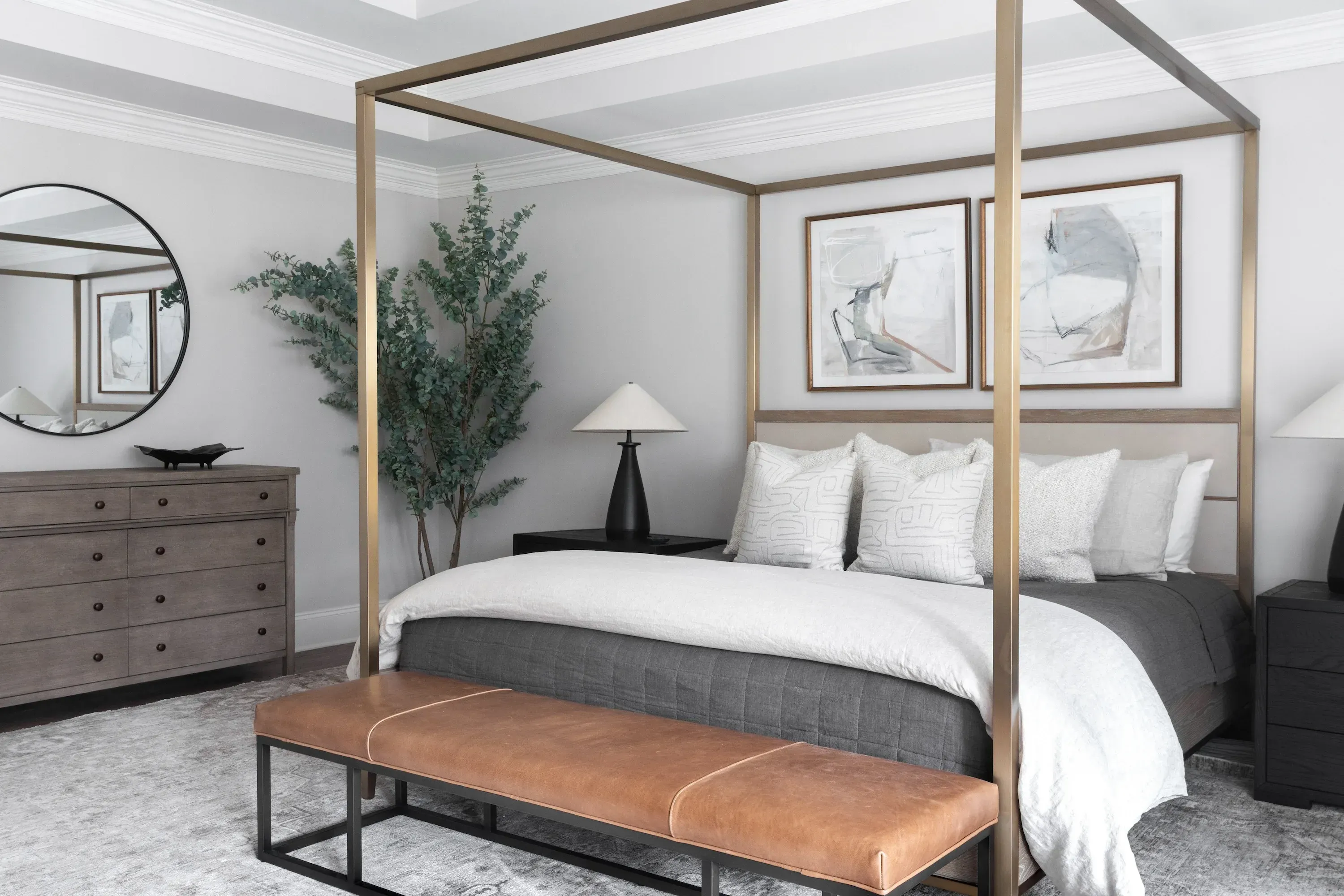
A statement canopy bed, layered textiles, and thoughtful furnishings add depth and interest without relying on a bold accent wall.
The same principle applies beyond architectural details. When a room feels boring or unfinished, it's tempting to add an accent wall to make it more interesting. But often, what the room really needs has nothing to do with the walls themselves. It may need:
- More texture
- Better furniture proportions
- A richer mix of materials
- Meaningful artwork
- Layered window treatments
- A more thoughtful color palette
- Statement lighting
Before reaching for the paintbrush, consider whether the room might benefit more from better proportions, layered textures, or a few thoughtfully chosen furnishings.
What Your Inspiration Photos Are Really Showing You
Think about the interiors you find yourself saving for inspiration. What is it that makes those rooms so appealing? You might initially be drawn to a beautiful paint color or a particular piece of furniture, but look a little closer.
Maybe it's the way the window treatments frame the room, how the furniture is arranged, or the contrast between different materials and finishes. Often, it's the combination of these details that creates the look you're drawn to, even if you don't immediately recognize why.
Next time you save a photo, look beyond the most obvious feature and consider what makes the entire space feel special. Understanding those details can help you make more thoughtful design decisions in your own home.
Accent Wall Alternatives: Carry the Idea Through the Whole Room
 (1) copy.jpg)
Decorative ceiling millwork, patterned wallpaper, and elegant furnishings work together to create a cohesive, inviting dining space.
Once you've identified what you love about a space, the next question is how to bring those elements into your own home. When a client asks for an accent wall, one of our first questions is, "What if we carried that idea throughout the space?" Sometimes, committing to a color, wallpaper, or architectural detail throughout the room can create a much stronger impact than limiting it to one wall.
- Paint. If you love a warm taupe, why not paint the entire room rather than leaving three walls white?
- Millwork. If you love a molding or paneling design, why not run it through the room so it reads as part of the architecture?
- Wallpaper. If you've fallen for a wallpaper, why not wrap the entire powder room or bedroom in it and create a truly immersive space?
But embracing a design idea doesn't always mean making a bold statement. If you prefer something more understated, materials, finishes, and textures can create just as much visual interest without relying on dramatic color or pattern.
Take a bathroom, for example. Rather than introducing a dramatic accent wall, you can create visual interest by using the same natural stone in multiple formats. A larger tile on the bathroom floor, a smaller format on the shower floor, and a complementary layout on the shower walls can make the space feel layered and cohesive without relying on a bold statement.
Ultimately, a single feature wall can absolutely work in the right setting. But whether you choose to make a bold statement or take a more understated approach, the goal is the same: a room that feels thoughtful, complete, and connected rather than a collection of disconnected design choices.
Longevity, Not a Lack of Personality
Whether your style leans bold and colorful or quiet and understated, we believe a home should reflect the people who live there. The goal isn't to avoid personality or follow a particular aesthetic, but to make choices that feel authentic to the home and will continue to feel right over time.
Trends will always come and go. Sometimes a trend is the perfect fit for a project, and that's wonderful. But our goal is a home you'll still love years from now, one where no one can pinpoint the year it was designed.
So, are accent walls out of style? The better question is whether one wall is doing the work the whole room deserves. Creating interest doesn't require an accent wall. It requires thoughtful design of the entire space.
If you're weighing a bold color, a wallpaper you can't stop thinking about, or millwork you've had saved for years, our local interior designers would love to help you find where it belongs. When you're ready, reach out to our Atlanta design group to start the conversation.
 (1) 2 copy.jpeg)