
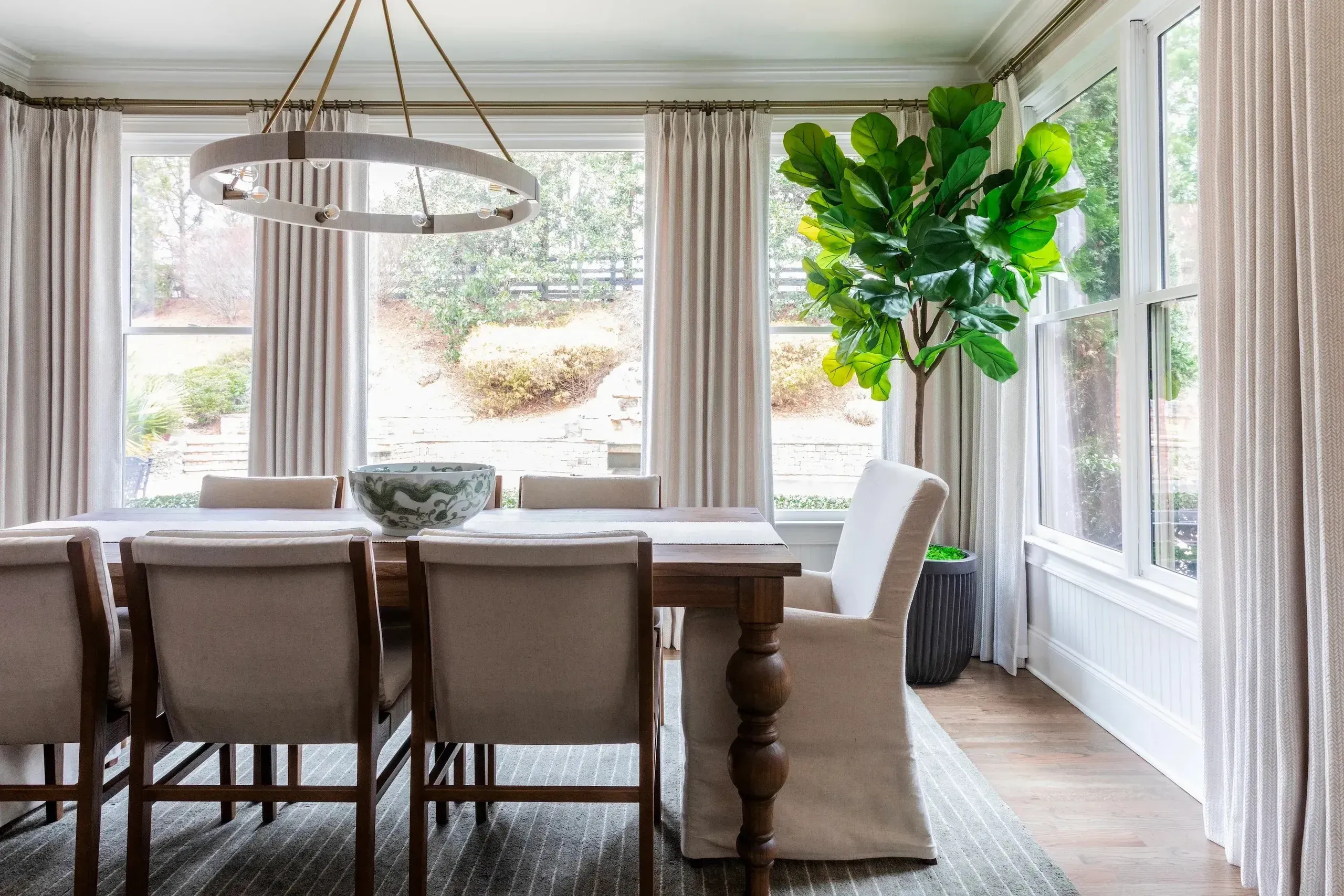

Modern window treatments do much more than cover glass. They filter light, protect privacy, soften hard edges, frame architectural details, and make a room feel finished. Because of this, they can be one of the trickiest design details to get right.
We often see beautiful rooms fall just short because the drapery is too low, too narrow, too short, or not functional for the way the space is actually used. If you've ever searched for types of drapes and curtains or tried to decide on the best fabric for drapes, this guide will help you understand the most popular styles and how designers choose the right drapery for each space.
What’s the Difference Between Curtains & Drapes?
.jpg)
-1 (1).webp)
Full-length drapery panels frame the window and add softness.
A shade fits within the window frame while a cornice board conceals the hardware above it.
Full-length drapery panels frame the window and add softness.
A shade fits within the window frame while a cornice board conceals the hardware above it.
Homeowners often use the terms curtains and drapes interchangeably, but in the design world, the word curtain is rarely used. That's because curtains often refer to ready-made fabric panels, while drapery usually implies a more tailored, custom approach that considers fabric, lining, fullness, pleat style, hardware, mounting height, and how the treatment functions within the space.
Drapery is just one type of window treatment alongside shades, blinds, cornice boards, and other specialty treatments. While all can contribute to privacy and light control, drapery is often the element that has the greatest impact on a room's overall look and feel, adding softness, texture, scale, and architectural interest.
In custom home design, it’s important to note that window treatments are rarely selected in isolation. A room might combine shades for privacy with full-length drapery for softness and visual impact. In this guide, we'll focus on drapery, specifically its styles, fabrics, construction, and the design decisions that make it feel custom, while recognizing that it often works best as part of a layered window treatment.
Types of Drapes
Before ordering custom-made draperies, it's helpful to know some common styles and terms.
.jpg)
This room features ripple fold drapery, a contemporary style that creates soft, continuous waves and a clean, streamlined appearance.
Drapery panels are full-length fabric panels installed on either side of a window. They add softness, height, movement, and a more finished look. They can be functional, meaning they open and close, or stationary, meaning they are used mainly as a decorative frame.
Best use cases: living rooms, dining rooms, bedrooms, offices, French doors, and large windows.
Popular Pleat Styles
.webp)
This Euro pleat keeps the drapery looking clean and tailored while allowing the fabric to fall in soft, consistent folds.
Most custom drapery uses hidden drapery pins that attach to decorative rings or a traverse track. The pleat style determines how the fabric is sewn and how it hangs.
- Pinch Pleat: A classic, tailored style where pleats are sewn into the top of the panel. Best for traditional, transitional, and timeless interiors.
- Double or Triple Pinch Pleat: A fuller version of pinch pleat drapery. Best for more polished bedrooms, dining rooms, and formal living areas.
- Euro Pleat: Similar to a pinch pleat, but gathered at the very top for a slightly cleaner look. Best for spaces that need a tailored style without feeling overly traditional.
- Goblet Pleat: A more decorative, formal pleat. Best for elegant dining rooms, formal living rooms, or stationary panels.
- Pencil Pleat: A softer, gathered style. Best for casual rooms or spaces where you want a more relaxed fabric look.
For ripple fold vs. pinch pleat drapery, think of ripple fold as the cleaner, more contemporary option and pinch pleat as the more classic, structured option.
Best Type of Blackout Drapes
If blackout performance is a priority, the fabric alone isn't enough. The lining, hardware, and installation all contribute to blocking light.
For bedrooms, media rooms, or nurseries, we typically recommend blackout-lined pinch pleat or ripple-fold drapery to block light around the entire window. For the strongest blackout effect, pair blackout-lined drapery with a secondary blackout window treatment installed beneath it.
Fabrics
The right fabric does more than complement your color palette. It influences how the drapery hangs, how it filters light, how much maintenance it requires, and the overall feeling of the space.
- Linen Drapery: Feels relaxed, airy, and organic. It’s a beautiful choice for living rooms, breakfast rooms, casual bedrooms, and spaces where you want softness without formality.
- Velvet Drapery: Feels rich, warm, and luxurious while offering added insulation and light control. Ideal for bedrooms, media rooms, dining rooms, and spaces where a more dramatic look is desired.
- Cotton and Cotton Blends: Versatile, durable options that work well in nearly any room. They offer a clean, tailored appearance and are available in a wide range of weights, textures, and weaves, making them suitable for both traditional and contemporary interiors.
- Performance Fabrics: Designed to resist stains, fading, and everyday wear, making them ideal for homes with children, pets, or strong sun exposure.
- Sheers: Gently filter natural light while maintaining an open, airy feel. They're often layered with lined drapery since they don't provide complete nighttime privacy on their own.
As an Atlanta design group, we don't start with a favorite fabric; we start with the room. We consider how the drapery needs to function, the amount of sunlight the space receives, and the overall design, all of which help determine the best material for the project.
Curtain Design Tips: How to Choose Drapery
So many things contribute to a beautifully executed window treatment, including fabric, style, placement, hardware, length, and function. These expert curtain design tips can help you avoid the most common window treatment mistakes.
1. Think About How the Drapery Will Function
Before choosing your drapery, think through how the treatment will actually be used.
Ask:
- Will the panels open and close daily?
- Is privacy needed at night?
- Does the room need blackout lining?
- Is the window exposed to strong sun?
- Are there pets, kids, or furniture pieces near the panels?
- Would a shade be more practical than full-length drapery?
In many rooms, layered window treatments offer the best balance of beauty and function. Drapery panels can be paired with other window treatments when additional privacy or light control is needed.
2. Hang Drapery Higher Than the Window
.webp)
There's no one-size-fits-all rule for hanging drapery. In this room, we mounted the hardware significantly higher to align with the architectural wall break and create a more balanced, intentional look.
One of the easiest ways to make a room feel taller is to mount drapery higher than the window casing. When space allows, install hardware closer to the ceiling or several inches above the window frame.
Designer rule of thumb:
- Hang drapery high enough to visually elongate the wall.
- Avoid placing the rod directly above the window casing when there is room to go higher.
- In rooms with low ceilings, mounting higher can help the space feel less compressed.
Drapery that is hung too low can make the window and ceiling feel shorter than they actually are.
3. Extend the Hardware Beyond the Window
Hardware should extend beyond the window frame so the drapery panels stack mostly outside the glass when open. This allows more natural light into the room while making the window appear wider.
As a general rule, extend the rod about 8–12 inches beyond each side of the window, adjusting for the window size, available wall space, and the fullness of the drapery.
Whenever possible, choose solid, high-quality hardware rather than lightweight telescoping rods, which can sag over time and disrupt the smooth movement of the panels.
4. Use Enough Fabric
Not enough fabric is one of the fastest ways to make drapery look sparse. Fullness gives panels their movement, softness, and custom appearance.
As a general guide, drapery should be around 1.5 to 2 times the width of the window, though the exact amount depends on the pleat style, fabric weight, and whether the panels are decorative or functional.
For example:
- Stationary panels may need less fabric because they are not intended to fully close.
- Functional drapery needs enough fullness to look beautiful when open and closed.
- Sheer or lightweight fabrics often need more fullness to avoid looking flat.
- Heavier fabrics may require careful planning to avoid panels feeling bulky.
This is why custom drapery is often worth the investment. The fabric, pleat style, lining, and hardware are all planned together.
5. Get the Length Right
Drapery length has a major impact on how finished a room feels. Panels that are too short can make even a beautiful space feel incomplete.
Popular drapery length options include:
- Slight hover: Panels sit just above the floor, often around .25 inches. This is clean, practical, and easy to maintain.
- Kiss the floor: Panels lightly touch the floor for a polished, tailored look.
- Break: Fabric bends slightly at the floor, creating a softer and more relaxed finish.
- Puddle: Extra fabric gathers on the floor for a more dramatic, romantic look.
For most homes, we prefer a slight hover or a soft kiss at the floor. Puddling can be beautiful, but it is best reserved for low-traffic rooms or more formal spaces since it requires more maintenance.
6. Consider Motorization
Motorized window treatments aren't just a luxury; they're often the most practical solution.
We frequently recommend them for:
- Large walls of windows
- Hard-to-reach windows
- Primary suites
- Media rooms
- Smart homes
The biggest downside is that motorization requires additional planning, especially during new construction or renovations. Electrical requirements should be considered before drywall goes up whenever possible.
7. Avoid the Most Common Drapery Mistakes
When considering different types of drapes and curtains, the style is only part of the decision. Scale and installation matter just as much.
Common mistakes to avoid:
- Hanging the rod too low
- Choosing hardware that is not wide enough
- Using too little fabric
- Selecting panels that are too short
- Forgetting about lining
- Choosing a pleat style that does not match the room
- Using lightweight hardware for heavy fabric
- Treating window treatments as an afterthought
The best window treatments are planned early, especially in custom spaces where ceiling height, trim, millwork, lighting, and furniture placement all affect the final design.
Custom Designer Window Treatments
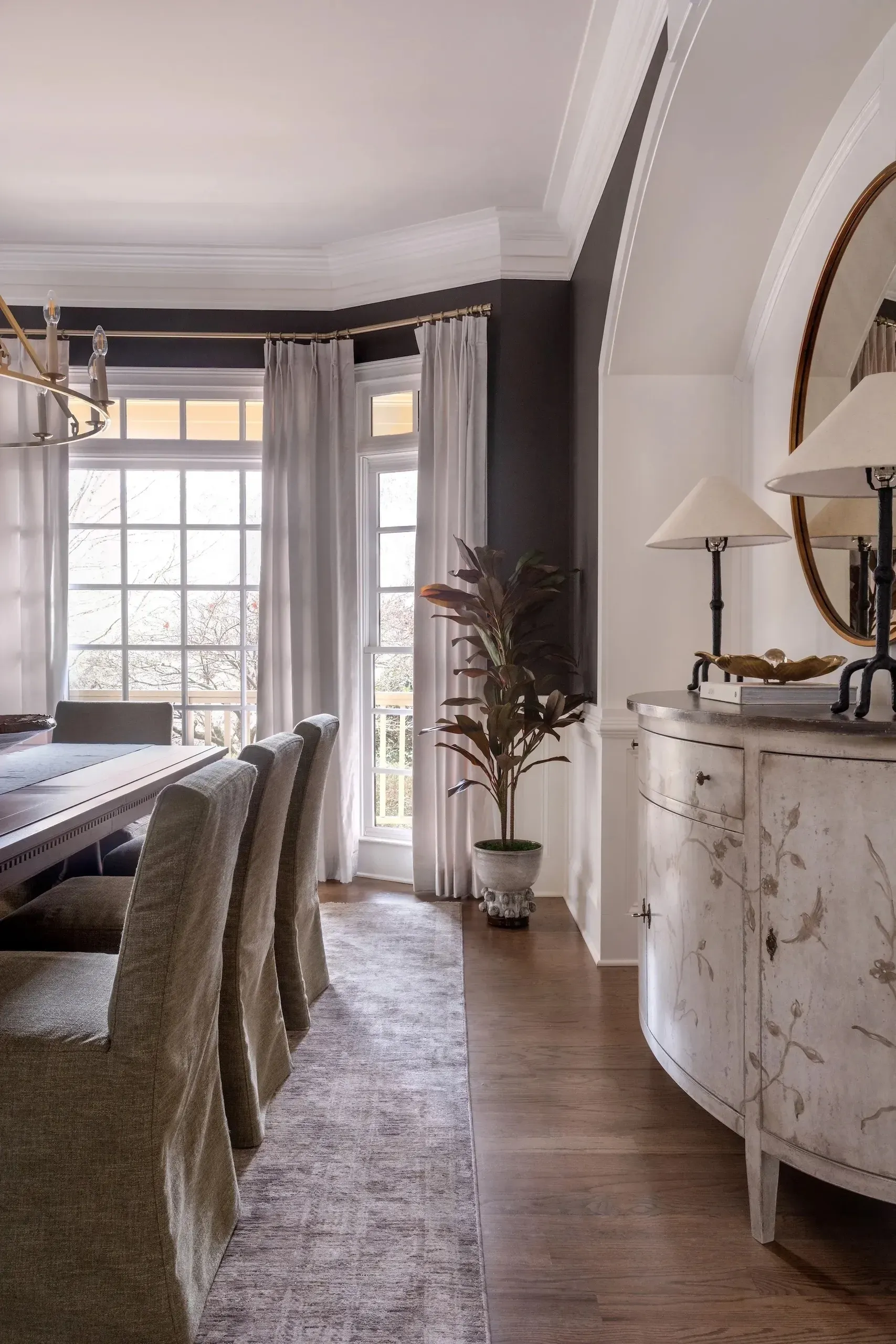
One of the biggest advantages of custom drapery is that it can be fabricated to follow angled walls and other unique architectural details.
The right window treatment should feel beautiful, but it also needs to solve a problem. When choosing types of drapes, start with the room’s function, then select the fabric, lining, pleat style, length, and hardware that support that use.
Modern designer window treatments lean toward a more tailored, understated aesthetic, with soft neutrals, natural textures, custom pleats, and timeless fabrics taking precedence over overly decorative treatments. The result is drapery that feels elegant today and will continue to look beautiful for years to come.
At Z & Co. Design Group, our local interior designers view window treatments as both practical and decorative, the kind of detail that can make an entire room feel more intentional, balanced, and complete. For help with your drapery, contact us today.


 copy.jpg)
